
Redesigning a safety-critical clinical experience through human-factors research and clinician co-design—reducing observer fatigue while enabling hospitals to safely expand virtual observation capacity.
The Challenge
Hospitals were facing staffing shortages, rising clinician burnout, and growing demand for patient observation. Traditional 1:1 sitters placed pressure on staffing and budgets, while early virtual observation systems introduced their own challenges.
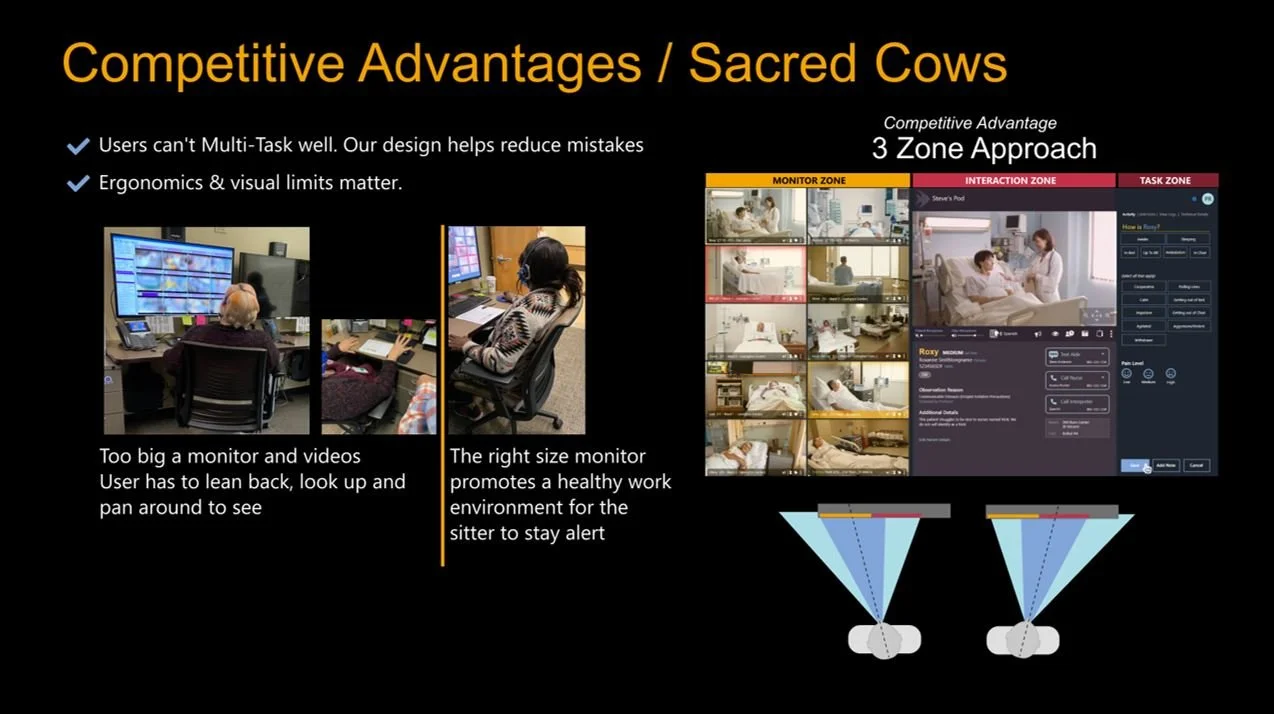
Observers had to monitor multiple video feeds for extended periods. Excessive head and eye movement, visual overload, and interfaces misaligned with clinical workflows made it difficult to maintain situational awareness and sustain attention throughout a shift.
The challenge wasn't simply to fit more patients on a screen. It was to create an experience that clinicians could use comfortably and confidently while maintaining the vigilance required for patient safety.
Designing Around Human Vision
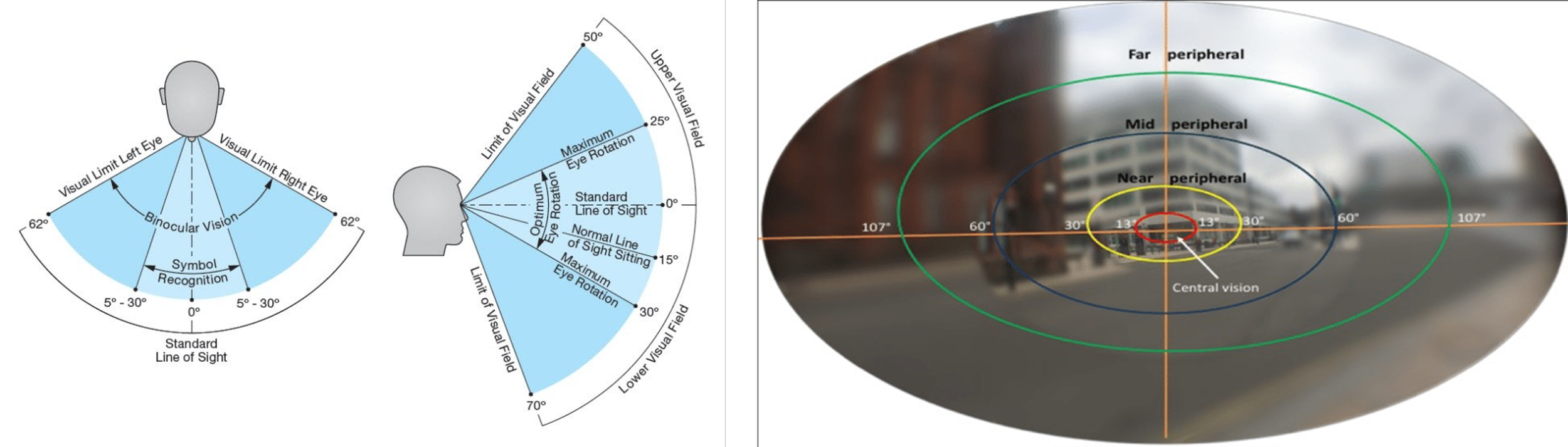
I led an ergonomics-driven redesign informed by research into central and peripheral vision. The goal was to help observers maintain awareness of multiple patients without constant head movement or unnecessary interaction.
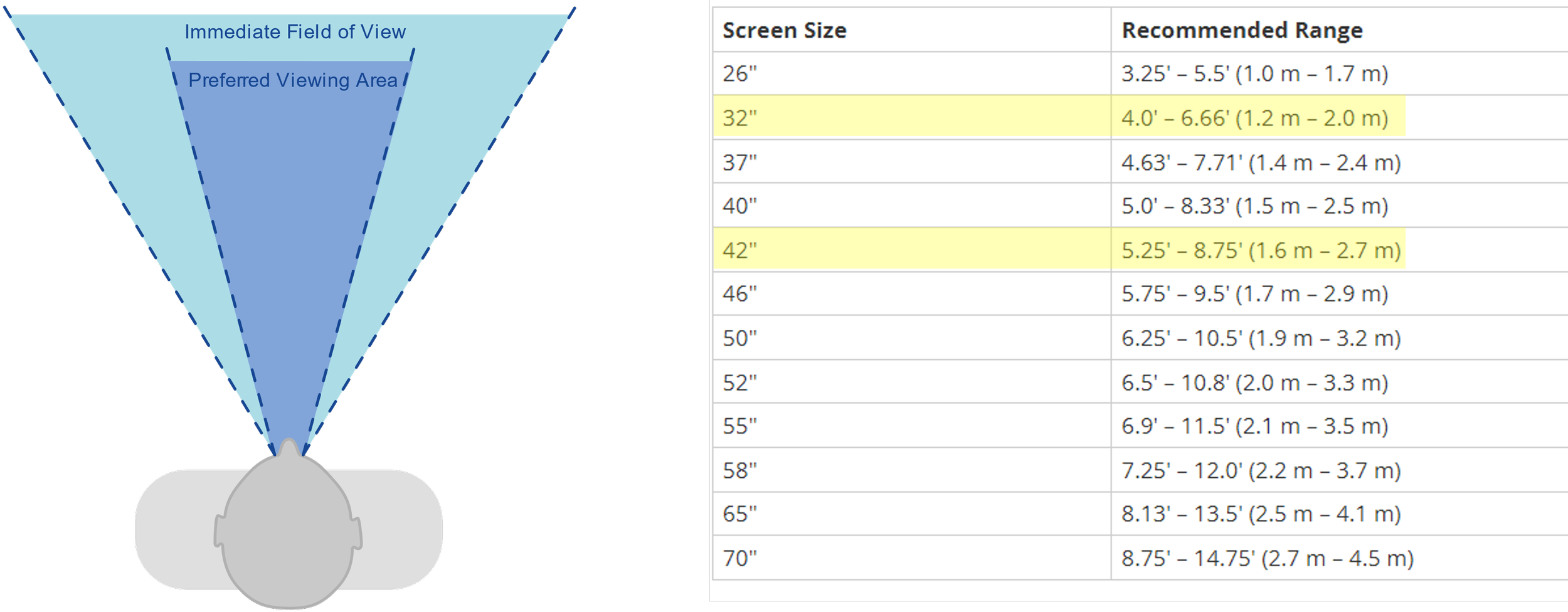
A 32-inch display provided the space needed for a dual-zone interface:
Interaction Zone: Focused tools for active engagement, alarms, and communication.
Monitoring Zone: Twelve peripheral video feeds designed to support continuous awareness.
This architecture separated active tasks from ongoing monitoring, making the experience easier to scan while preserving access to critical actions.
Optimizing the Viewing Experience
Video-feed size and placement were central to the redesign. I studied how people naturally consume video and used those findings to inform the dimensions and positioning of patient feeds.
The redesigned feeds were more than 330% larger than typical vertical mobile video, supporting clinical clarity without overwhelming the observer.
The interface also incorporated a clearer visual hierarchy, one-click access to alarms and communication, night-vision and low-light optimizations, and simplified interactions designed to require no training.
Together, these changes reduced unnecessary movement and helped observers focus on the information that mattered.
Designing With Clinicians
The redesign was grounded in clinical co-design. Registered nurses and certified nursing assistants helped shape alarm placement, workflow sequencing, and visual prioritization.
Their input helped ensure that the interface reflected the realities of clinical practice rather than assumptions made outside the monitoring environment.
This collaboration was essential in a safety-critical context: the experience needed to work not only in a design review, but during real shifts, with real workloads and competing demands for attention.
Scaling Without Adding Staff
The redesigned experience enabled hospitals to expand from 10:1 to 12:1 patient-to-observer ratios—a 20% increase in observation capacity without adding staff.
That increase was possible because the interface supported broader situational awareness while reducing the physical and cognitive burden of monitoring multiple patients.
The work connected human-factors research to an operational outcome: helping hospitals scale virtual observation while keeping clinician usability and patient safety central to the design.
The Results
Outcomes associated with the redesigned virtual observation program:
20% greater observation capacity, moving from 10:1 to 12:1 patient-to-observer ratios.
68% reduction in fall rates (platform outcomes).
83,678 falls avoided (platform outcomes).
Improved HCAHPS scores across five domains.
Reduced observer fatigue and greater clinical confidence.
The results demonstrate the potential of a human-centered approach to improve both the experience of clinical work and the operational capacity of virtual observation.
The Impact
This project demonstrates how UX can contribute to safety-critical systems beyond the interface itself. By combining human-vision research, ergonomic principles, and clinician co-design, I helped transform virtual observation into an experience designed for sustained attention and scalable use.
The central lesson was that operational efficiency and a better clinician experience do not have to compete. When the interface is designed around the people using it, the system can support both.
