
AI‑Driven Sitter Presence Detection
As hospitals scale virtual observation programs and increase patient‑to‑sitter ratios, they need verifiable trust that sitters are present, attentive, and delivering the care they’re trained to provide. I led the design and product strategy for Collette Health’s first AI‑driven feature—Sitter Presence Detection (SPD)—a workflow‑integrated system that uses computer vision to confirm sitter presence, automate nudges and escalations, and provide documentation for compliance and quality assurance. SPD became the foundation for future AI capabilities across the platform.
The Problem
Hospitals rely on virtual sitters to prevent falls, reduce adverse events, and support overstretched nursing teams. As programs grow, leaders need confidence that sitters are consistently present and attentive across large patient pods. Without automated verification, teams depend on manual audits, inconsistent oversight, and trust alone.
The challenges included:
No automated way to confirm sitter presence
Limited visibility into sitter attentiveness or pod imbalance
Increased risk as patient‑to‑sitter ratios scale
Operational pressure to validate sitter performance for compliance and billing
Need for a foundation to support future AI‑enabled workflows
The absence of sitter‑presence verification created risk for hospitals and limited Collette Health’s ability to scale safely and credibly.
Constraints
SPD required solving multiple technical, ethical, and operational constraints:
AI ethics and privacy — Protect PHI, avoid intrusive monitoring, and ensure transparent data governance.
Accuracy and reliability — The system needed to detect presence without false positives or negatives that could erode trust.
Workflow integration — Sitters needed gentle nudges, not punitive alerts; supervisors needed clear escalation paths.
Configurability — Hospitals required adjustable thresholds to match policy, staffing models, and acuity.
Documentation — Compliance teams needed snapshots and logs to support audits and incident reviews.
Scalability — SPD had to support higher patient‑to‑sitter ratios and +staff models.
These constraints shaped a solution that balanced safety, privacy, and operational practicality.
Approach
Defining AI’s Role
We framed AI not as magic, but as a force multiplier—a tool to automate routine tasks, increase contextual awareness, and streamline workflows.
This clarity guided the design toward augmentation, not replacement.
Designing Sitter Presence Detection
SPD was built to answer a single foundational question: Is the sitter present and attentive?
Key capabilities included:
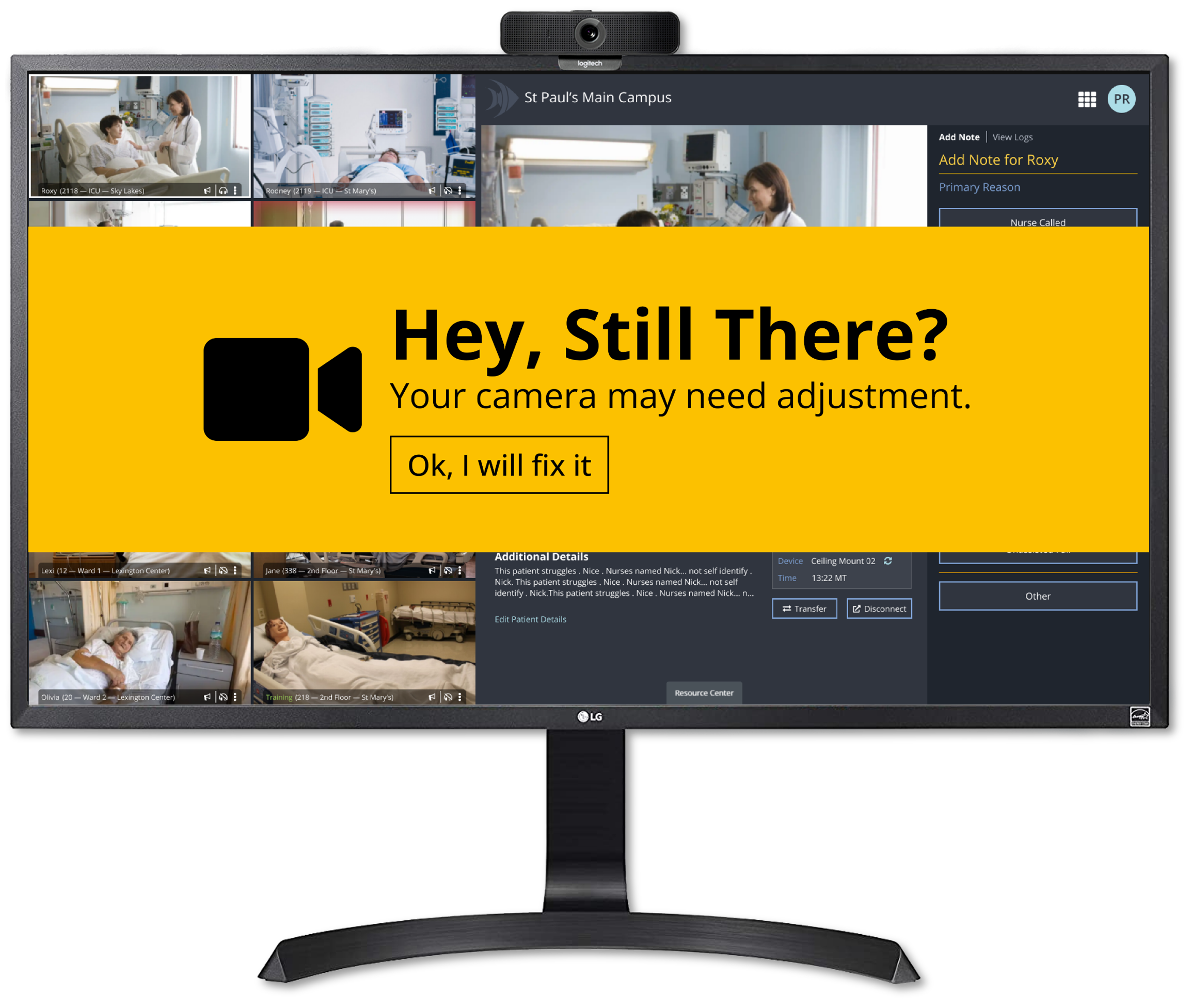
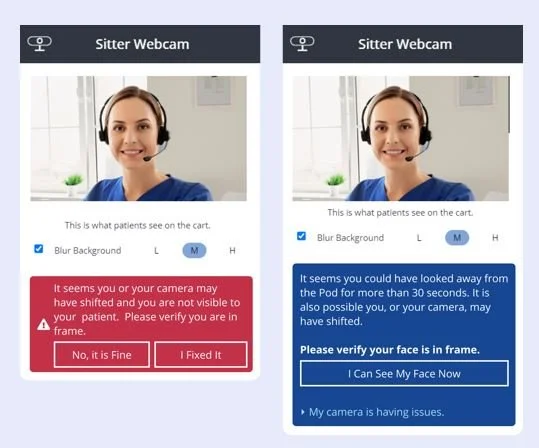
Presence verification using computer vision
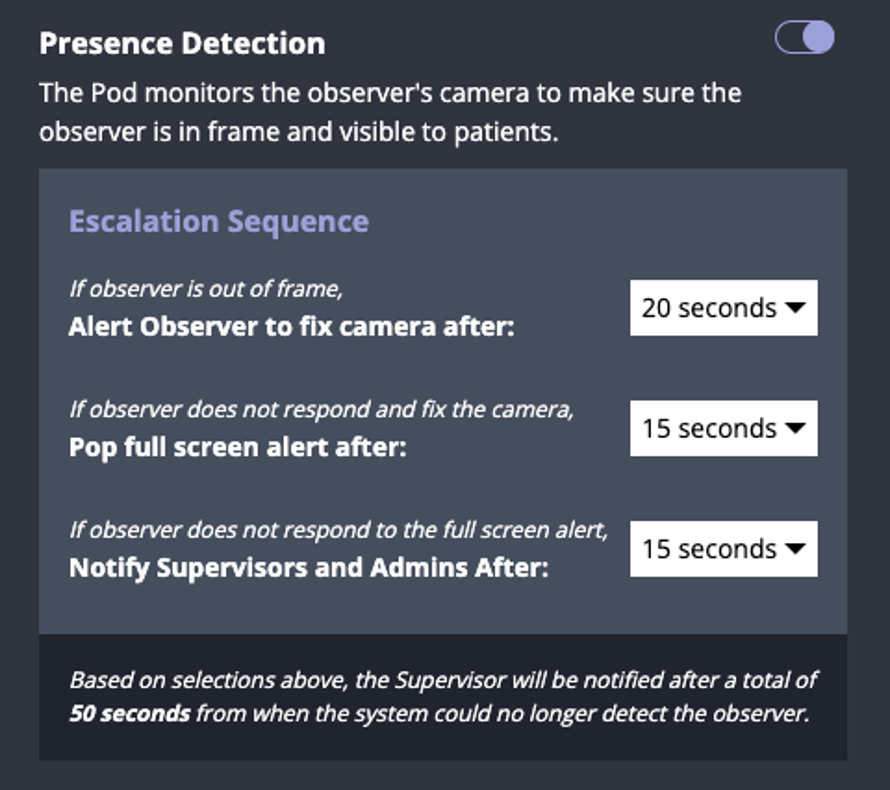
Nudges and reminders that escalate over time
Configurable thresholds for presence windows
Snapshot capture for documentation and audit trails
Optional email notifications for supervisors
These features created a closed‑loop system that supported sitters while giving leaders confidence in program reliability.
Building the AI Foundation
SPD was intentionally designed as the first step in a broader AI roadmap, enabling future capabilities such as:
In‑room context (number of people, patient vs. staff vs. visitors)
Patient state detection (resting, asleep, active)
Camera auto‑tracking
Sitter attentiveness and identity verification
Pod‑imbalance detection
SPD established the technical and ethical groundwork for these future enhancements.
Ethics, Privacy & Governance
We developed a governance framework addressing:
PHI protection
Data ownership
Transparency around AI behavior
Clear boundaries between helpful automation and intrusive monitoring
This ensured SPD aligned with hospital expectations and legal requirements.
Rollout Strategy
To ensure adoption and trust, we used a phased rollout:
Beta with internal staff
Post‑beta revisions based on real‑world feedback
Limited customer release
Formal feature launch
This approach allowed us to refine accuracy, tune thresholds, and validate workflows before broad deployment.
Outcomes
Increased Trust and Accountability
Hospitals gained verifiable assurance that sitters were present and attentive, strengthening confidence in virtual observation programs.
Improved Workflow Reliability
Automated nudges and escalations reduced manual oversight and ensured consistent sitter engagement.
Better Documentation for Compliance
Snapshot capture and presence logs supported audits, incident reviews, and quality reporting.
Foundation for Future AI Features
SPD established the technical, ethical, and workflow patterns for Collette Health’s broader AI roadmap.
Stronger Market Position
As Collette Health’s first AI‑driven feature, SPD signaled innovation, maturity, and readiness to support higher patient‑to‑sitter ratios.