Modernizing a $20M Utility System Into a Dual‑Screen Enterprise Experience
SCANA’s customer information system was a 1990s platform powering billing, service orders, outage management, and field operations. It contained hundreds of interfaces, inconsistent data structures, and workflows that required employees to memorize codes and navigate complex screens. The system was stable but cognitively demanding, and it constrained operational efficiency.
Leading UX for a multi‑year enterprise transformation
As Lead User Experience Designer, I was responsible for the information architecture, interaction design, and usability strategy for a $20M, multi‑year modernization effort. My role was to translate deeply complex business processes into a coherent, intuitive dual‑screen experience that improved speed, accuracy, and employee satisfaction.
Designing for clarity and cognitive load
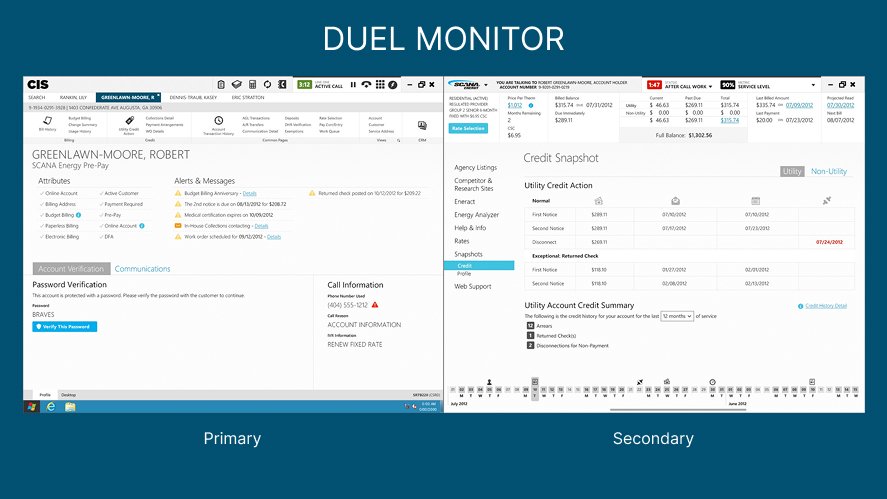
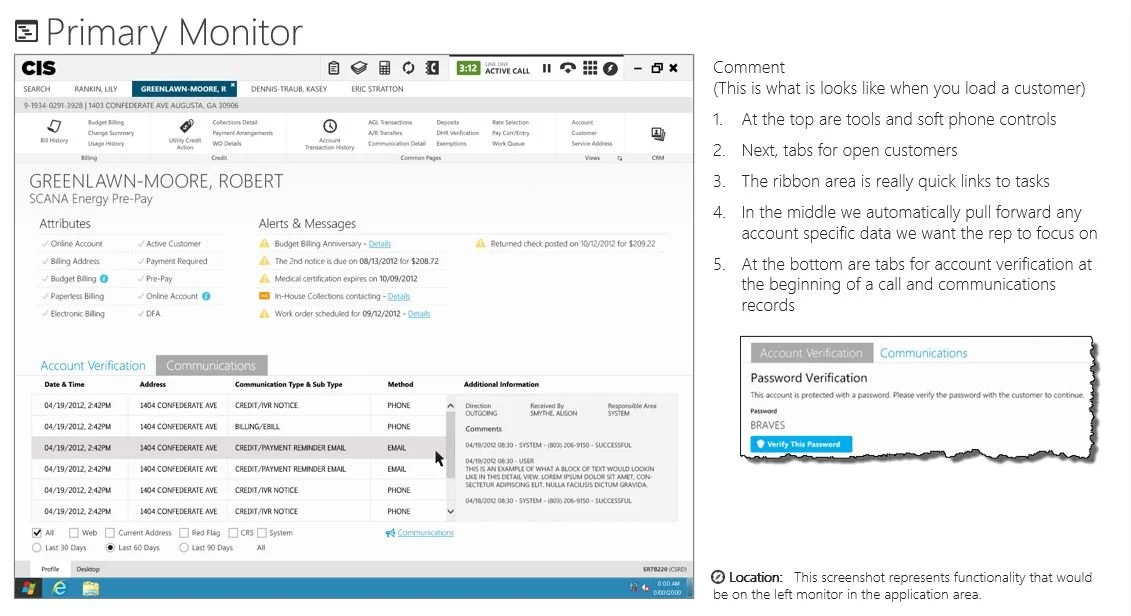
The breakthrough came from rethinking how employees processed information. Instead of forcing users to toggle between screens and mentally stitch together data, we designed a dual‑screen model: one screen dedicated to customer context, the other to task execution. This reduced cognitive load, improved accuracy, and aligned the system with how employees naturally worked.
Building a scalable design system
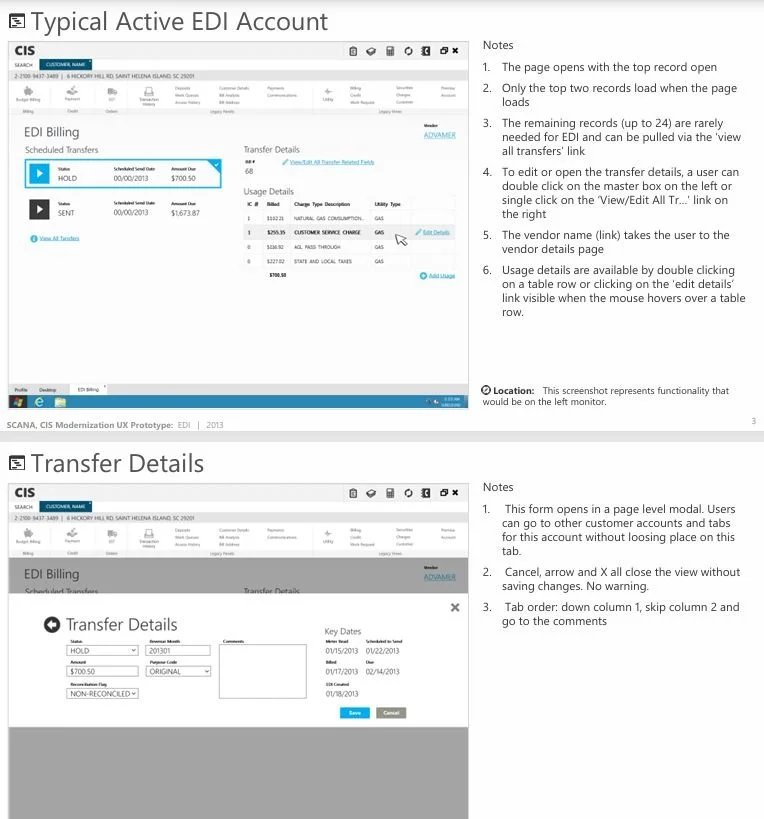
Given the scale of the modernization, I created a design system that standardized components, patterns, and interaction rules across hundreds of screens. This enabled dozens of developers to work in parallel while maintaining consistency, reducing rework, and accelerating delivery.
Streamlining high‑volume workflows
I redesigned critical workflows—including payments, service sign‑ups, program enrollment, and outage management—to reduce steps, eliminate redundant data entry, and surface contextual information at the right moments. These improvements directly increased operational efficiency and reduced training time.
Enterprise‑wide impact
The redesigned system delivered measurable improvements:
• A modern dual‑screen Windows‑8‑based enterprise platform
• Faster onboarding and reduced training time
• Significant improvements in workflow speed and accuracy
This work demonstrates my ability to lead UX for large‑scale enterprise transformations, build design systems that scale, and translate complex operational processes into intuitive, high‑performing experiences.