
Scaling an AI‑Enabled Virtual Care Platform to Enterprise Reliability
When I joined Collette Health, the platform was evolving from an early‑stage concept into a mission‑critical clinical system. Hospitals were beginning to rely on virtual observation and virtual nursing workflows as part of patient safety, and the user experience needed to support that level of trust. The challenge was to scale the platform’s reliability, maturity, and usability while building a design organization capable of supporting enterprise‑grade clinical workflows.

Leading and maturing the organization’s user experience
As the company grew, I built and led UX within a 22‑person product and engineering organization. I established the design vision, design system, and user‑experience standards that shaped how clinicians interacted with the platform. This included maturing the design practice from early concept work into a structured, research‑driven discipline with clear patterns, testing protocols, and cross‑functional rituals.
Elevating reliability through design
Reliability was not just an engineering goal—it was a user‑experience requirement. I reframed reliability as a core part of the UX strategy, ensuring that workflows, interfaces, and system behaviors supported clinical trust. This included designing for high‑acuity environments, reducing cognitive load, and ensuring that clinicians could depend on the platform during continuous monitoring and high‑volume usage.
Aligning teams around clarity and governance
To support scale, I created the Product Council, a governance model that aligned all stakeholders around shared priorities. This structure improved buy-in, managed expectations, reduced friction, and ensured that design considerations were integrated into roadmap decisions, technical planning, and customer commitments.
Designing AI‑enabled workflows responsibly
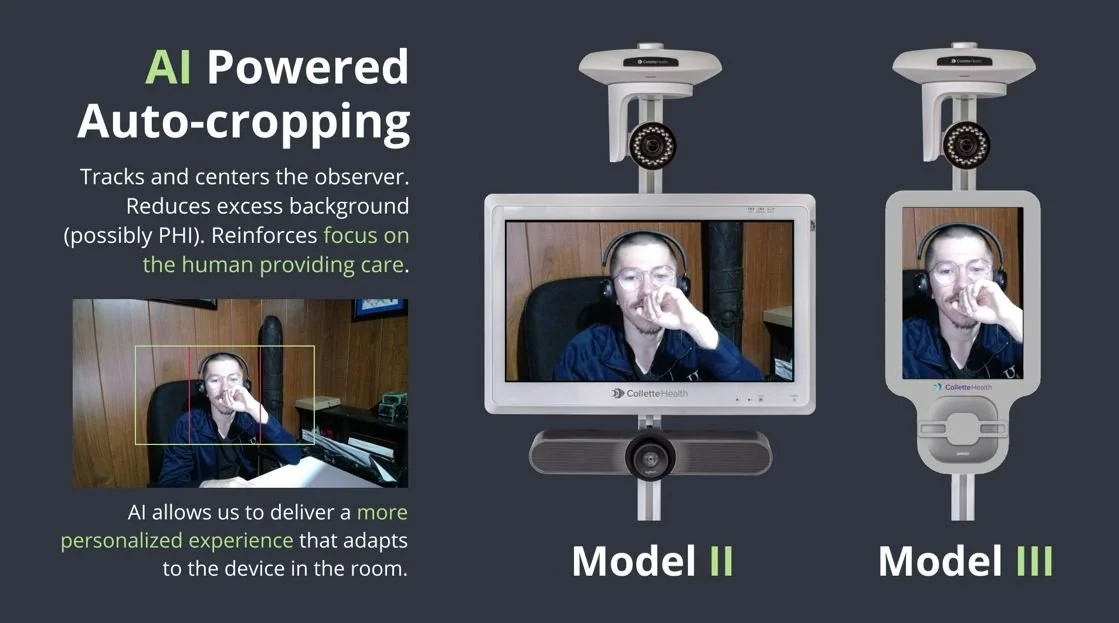
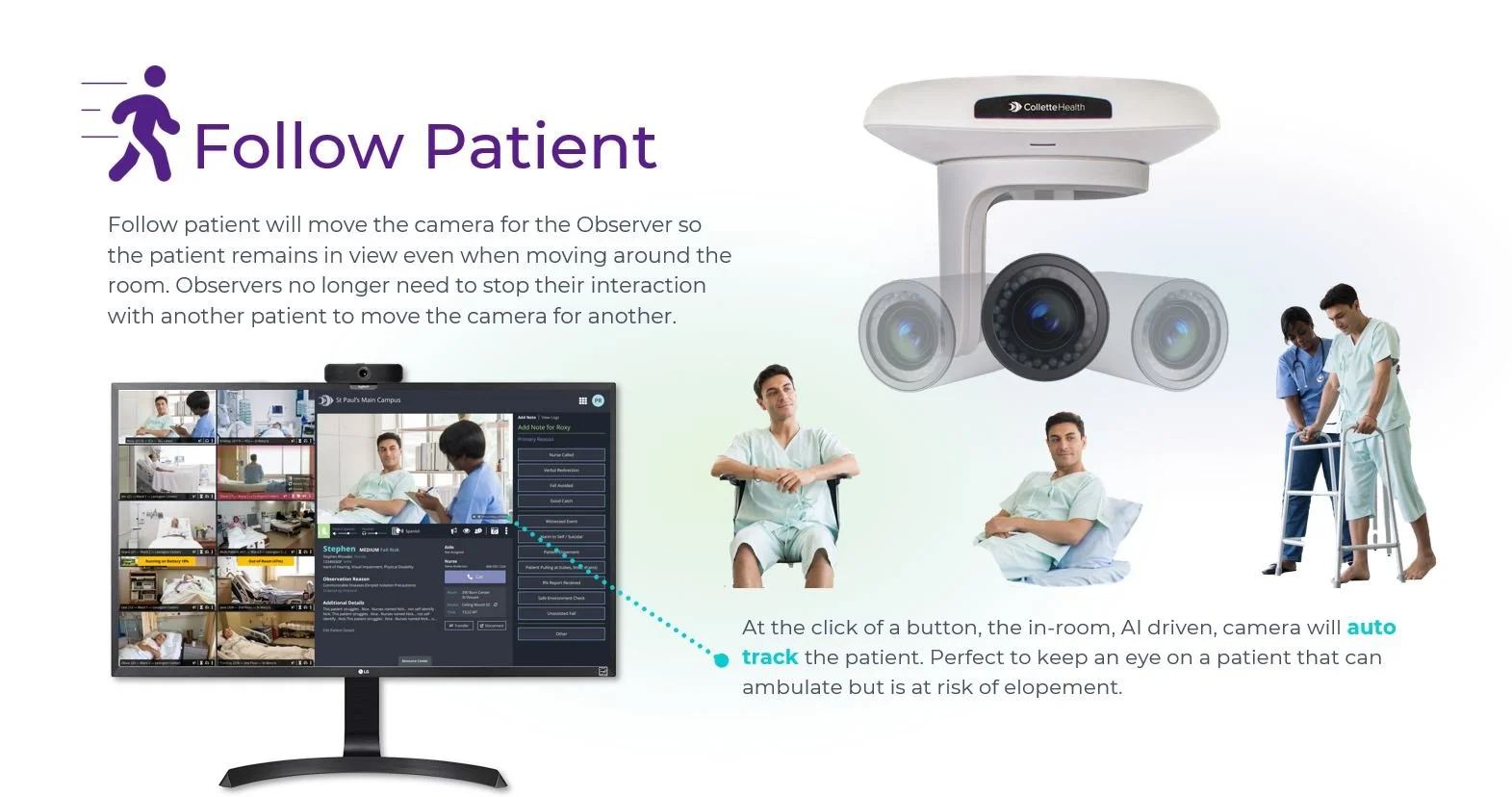
As AI became central to the platform’s differentiation, I partnered closely with Innovation and Engineering to ensure that AI‑driven capabilities were intuitive, clinically appropriate, and validated with real users. This design‑led approach enabled the company to deliver nine AI capabilities.
Strengthening product identity and experience
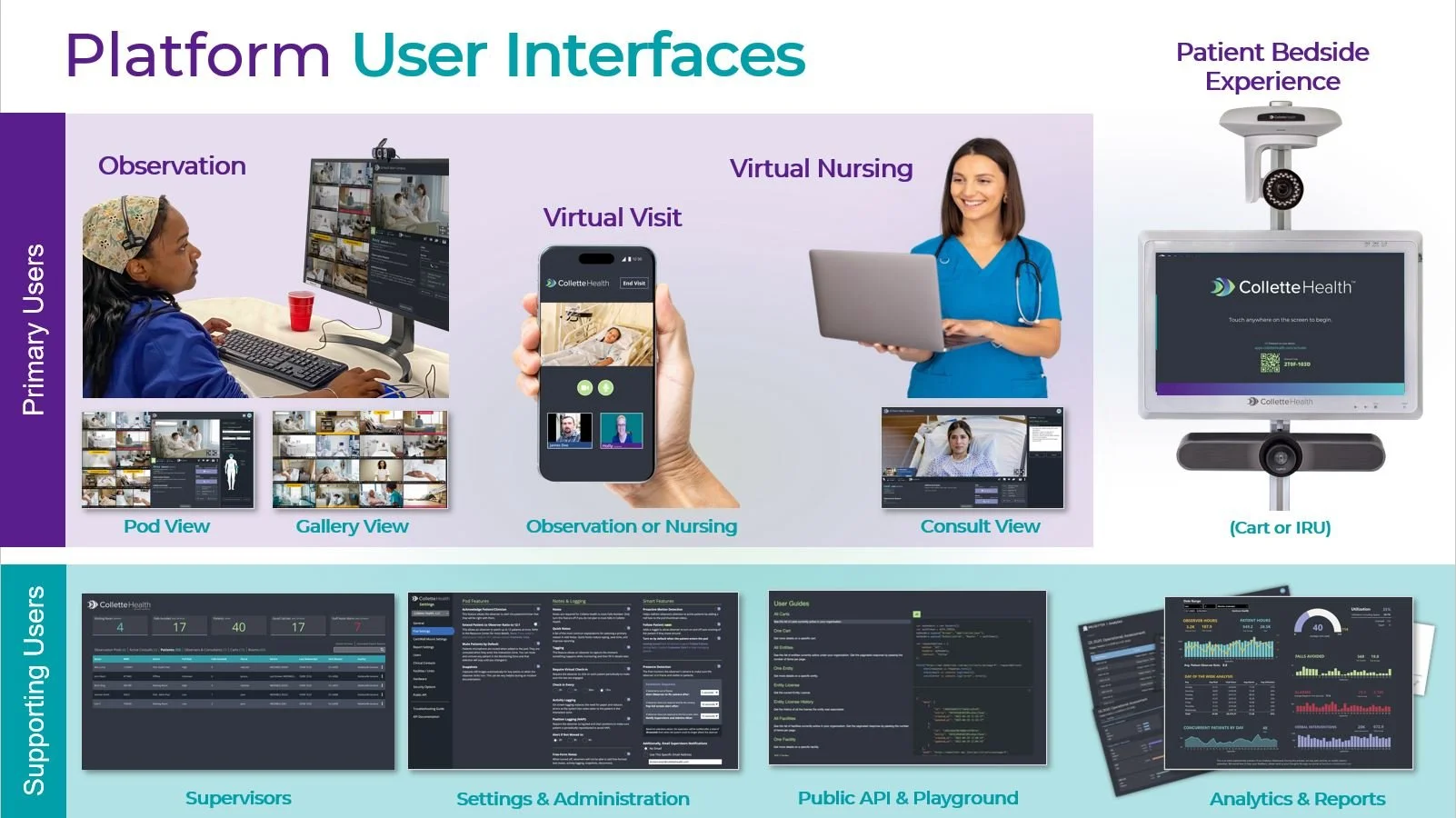
I led two full product rebrands, evolving the platform’s identity to reflect its enterprise maturity. This included refining high‑acuity workflows, modernizing the design system, and ensuring consistency across clinician‑facing and administrative experiences.
Enterprise‑grade outcomes
Through design leadership, cross‑functional alignment, and a focus on clarity, the platform achieved:
Adoption across 185+ hospitals
30M+ video minutes per month
99.999% uptime supporting continuous clinical workflows
Recognition as Best‑in‑Class for Virtual Nursing & Observation (KLAS 2025 & 2026)