
Designing and Building an AI‑Powered Mental Performance Platform in 12 Weeks
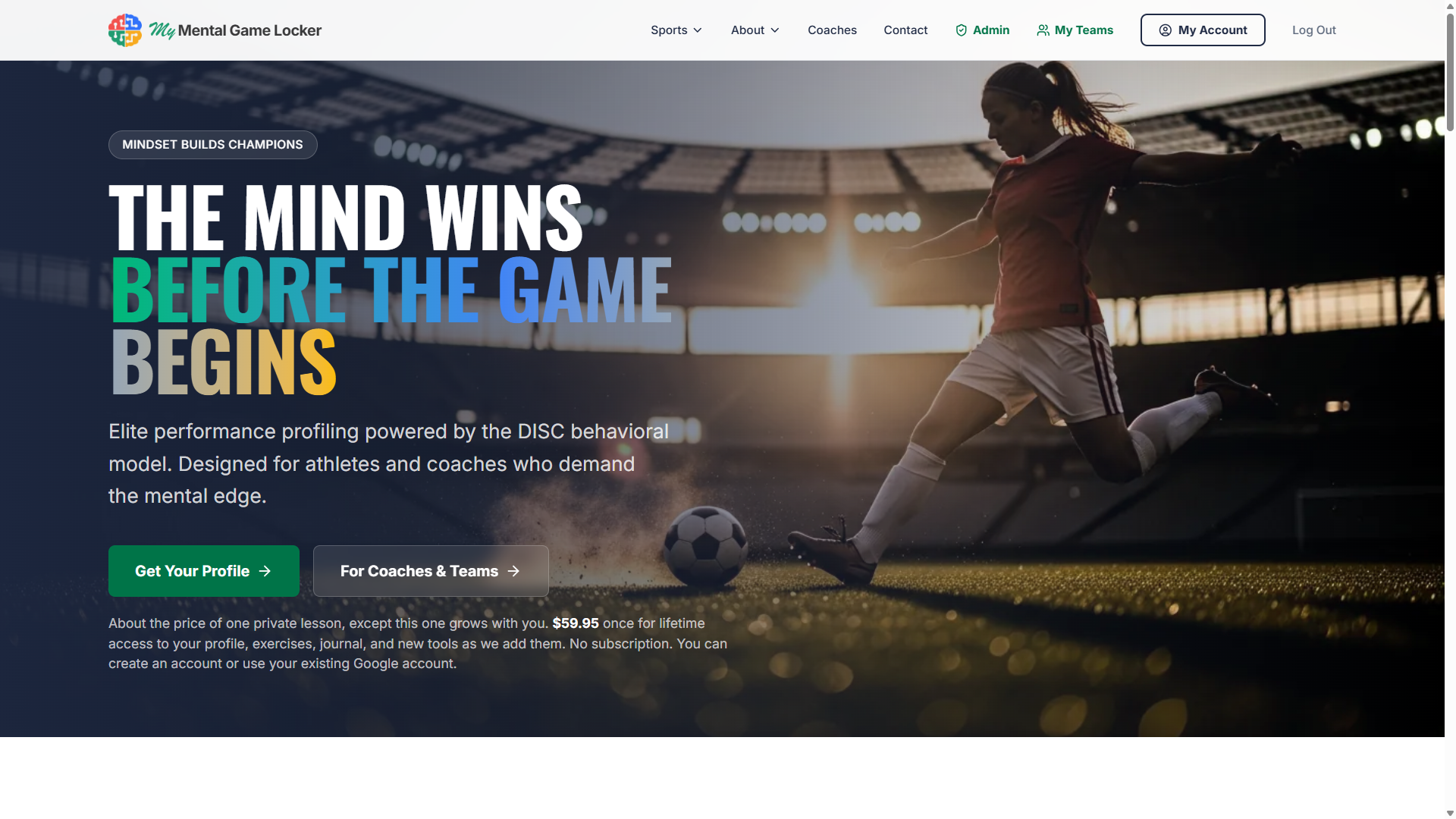
Youth sports invest enormous time and money in physical development, yet the mental side of the game has never been measured with the same seriousness. The tools that existed were clinical, expensive, or built for adults in corporate settings, so coaches relied on instinct. My Mental Game Locker (MMGL) needed a platform that could turn a DISC‑based behavioral assessment into something coaches, athletes, and parents could actually use. It also had to be built fast enough to reach teams while the idea still had momentum.
Leading product strategy and UX through Palmetto AI Solutions
As co‑founder of Palmetto AI Solutions, I partnered with Allen Knight to lead product strategy, UX, and the build. We used AI as the coding partner. That let us deliver a production platform in 12 weeks, with separate experiences for athletes, coaches, parents, and administrators.
Designing for the coach's real job
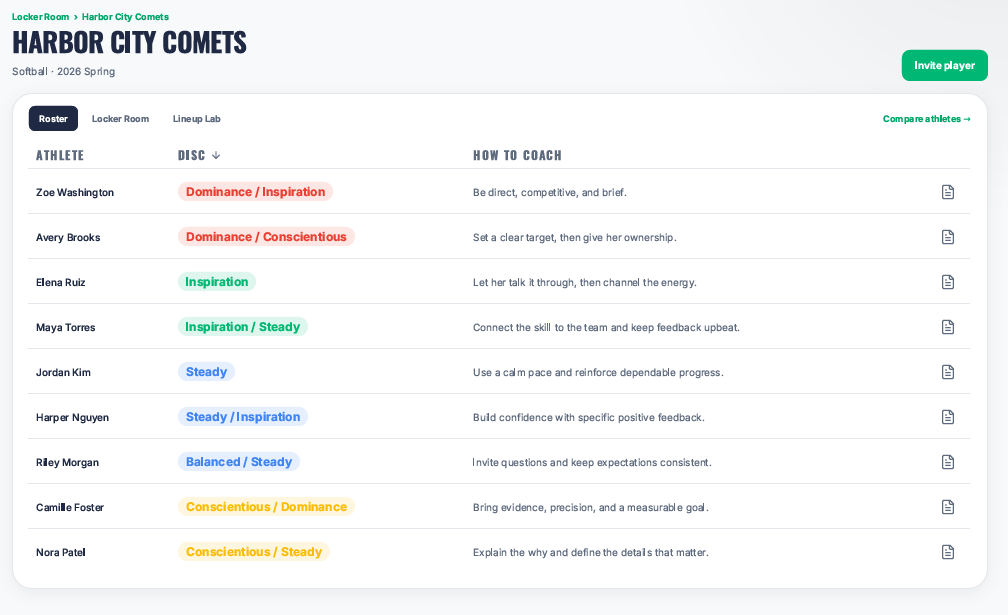
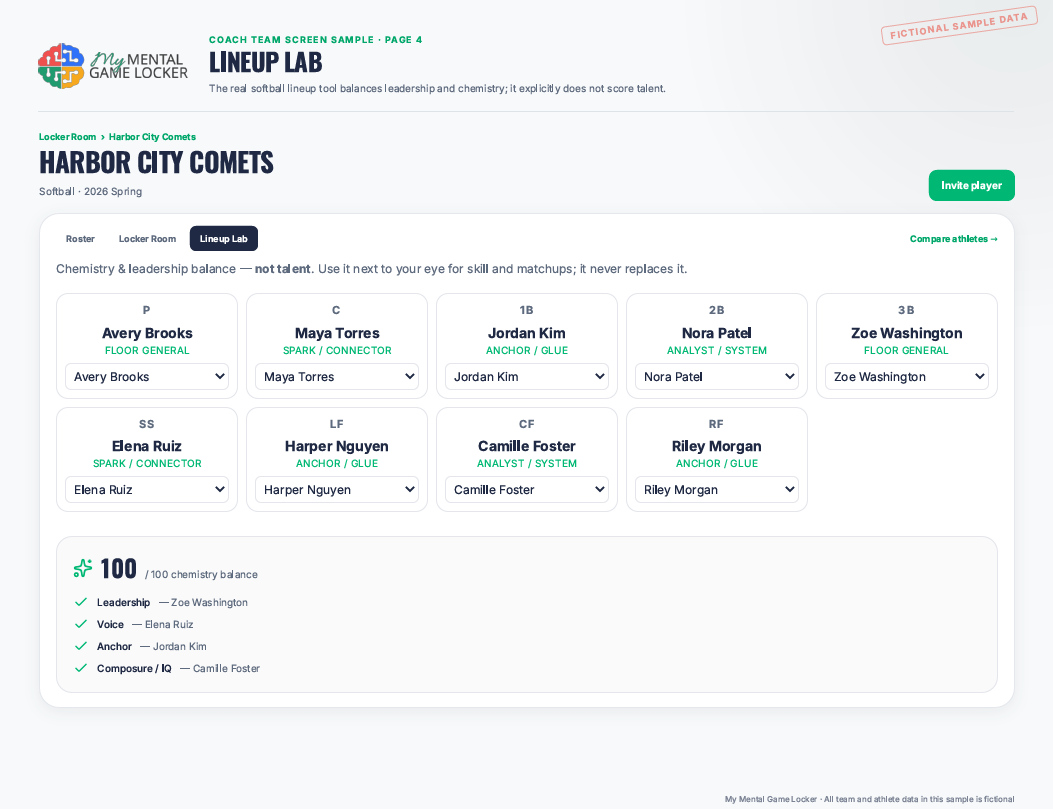
Each athlete receives a sport‑specific profile that shows how they respond to pressure, how they process feedback, and what they need from a coach to perform at their best. The larger value comes from the roster view. Compare Athletes puts every player's behavioral wiring side by side. Lineup Lab shows how different styles combine on the field. The Locker Room gives coaches a working space for managing the team through the season.
Building trust into a youth platform
Because the platform serves minors, safety was a design requirement from the start rather than a feature added later. Parents give consent through a secure link, teams are approved one by one, and data is purged automatically.
Collapsing the distance between design and delivery
In past roles, design intent passed through specs, handoffs, and sprints before I could see what survived. On MMGL, I could watch a coach struggle with a screen on Tuesday and have the fix live on Wednesday. The research loop that used to take a quarter now takes a day. Speed alone wasn't the goal, though. Speed without design discipline just ships poor experiences faster.
Treating the build as a system
What made the work repeatable was designing the process, not just the screens. Converting a new sport's reports into the platform became a defined, reusable workflow. Adding hockey and baseball were workflow loops, not rebuilds.
Outcomes
A production platform delivered in 12 weeks
Support for soccer, baseball, softball, golf, and hockey
Four role‑based experiences for athletes, coaches, parents, and administrators
A repeatable process for adding new sports without rebuilding
This work demonstrates my ability to translate a complex behavioral model into an intuitive product, design for trust in sensitive environments, and use AI to take a product from concept to production without sacrificing design discipline.
Built with Palmetto AI Solutions, where we design and build AI systems that give small business teams leverage. See the platform at mymentalgamelocker.com and learn more at palmettoaisolutions.com.